


Shopping Cart
Remove All Your shopping cart is currently empty

Synonyms:
| Pack Size | Price | USA Stock | Global Stock | Quantity |
|---|---|---|---|---|
| 25 µL | $149 | 7-10 days | 7-10 days | |
| 50 µL | $261 | 7-10 days | 7-10 days | |
| 100 µL | $470 | 7-10 days | 7-10 days |
| Description | Anti-GNA13 Antibody (3C703) is a Mouse antibody targeting GNA13. Anti-GNA13 Antibody (3C703) can be used in WB,IHC-P,IHC-Fr,ICC/IF,IF. |
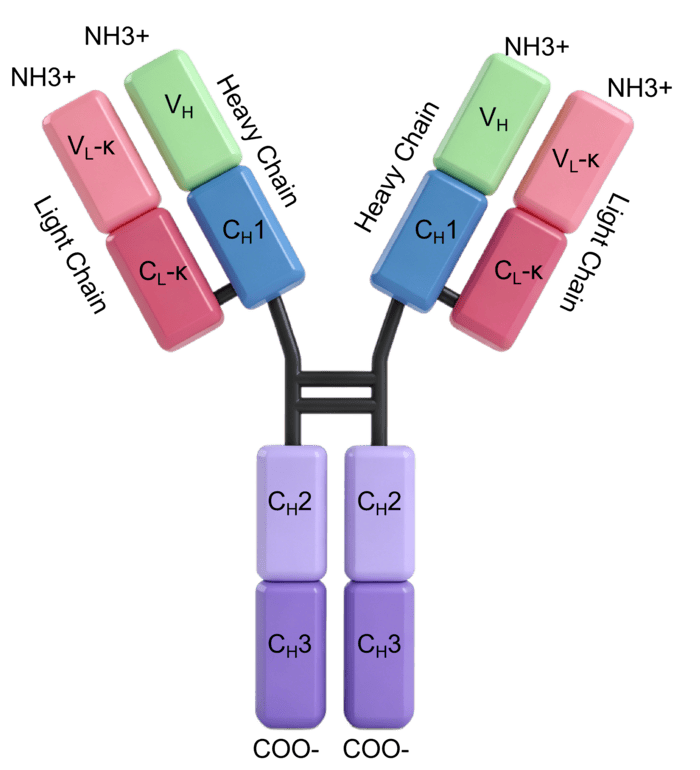
| Ig Type | IgG1, Kappa |
| Clone | 3C703 |
| Reactivity | Human (predicted:Mouse,Rat) |
| Verified Activity | 1. Blocking buffer: 5% NFDM/TBST Primary Ab dilution: 1:1000 Primary Ab incubation condition: 4°C overnight Secondary ab: Goat Anti-Mouse IgG H&L (HRP) Lysate: 1: HEK-293, 2: HepG2, 3: Rat brain, 4: Neuro-2a Protein loading quantity: 20 μg Exposure time: 30 s Predicted MW: 44 kDa Observed MW: 44 kDa 2. Tissue: Human testis Section type: Formalin fixed & Paraffin-embedded section Retrieval method: High temperature and high pressure Retrieval buffer: Tris/EDTA buffer, pH 9.0 Primary Ab dilution: 1:100 Primary Ab incubation condition: 1 hour at room temperature Secondary Ab: SP Kit (Mouse) Counter stain: Hematoxylin (Blue) Comment: Color brown is the positive signal for TMAB-06600 3. Cell line: HepG2 Fixative: 100% Ice-cold methanol Permeabilization: 0.1% TritonX-100 Primary Ab dilution: 1:50 Primary incubation condition: 4°C overnight Secondary Ab: Goat Anti-Mouse IgG Nuclear counter stain: DAPI (Blue) Comment: Color green is the positive signal for TMAB-06600 |
| Application | |
| Recommended Dose | WB: 1:500-1000; IHC-P: 1:100-500; IHC-Fr: 1:100-500; ICC/IF: 1:100-500; IF: 1:100-500 |
| Antibody Type | Monoclonal |
| Host Species | Mouse |
| Subcellular Localization | Cell Membrane; lipid-anchor. |
| Construction | Recombinant Antibody |
| Purification | Protein G purified |
| Appearance | Liquid |
| Formulation | 0.01M TBS (pH7.4) with 1% BSA, 0.02% Proclin300 and 50% Glycerol. |
| Concentration | 1mg/ml |
| Research Background | Heterotrimeric G proteins function to relay information from cell surface receptors to intracellular effectors. Each of a very broad range of receptors specifically detects an extracellular stimulus (a photon, pheromone, odorant, hormone or neurotransmitter) while the effectors (i.e., adenyl cyclase), which act to generate one or more intracellular messengers, are less numerous. In mammals, G protein Alpha, Beta and Gamma polypeptides are encoded by at least 16, 4 and 7 genes, respectively. Most interest in G proteins has been focused on their Alpha subunits, since these proteins bind and hydrolyze GTP and most obviously regulate the activity of the best studied effectors. Four distinct classes of G Alpha subunits have been identified; these include G Alpha s, G Alpha i, G Alpha q and G Alpha 12/13. The two members of the fourth class of G Alpha subunit proteins, G Alpha 12 and G Alpha 13, are insensitive to ADP-ribosylation by pertussis toxin, share 67% identity with each other and less than 45% identity with other G Alpha subunits and are widely expressed in a broad range of tissues. |
| Gene Name | GNA13 |
| Gene ID | |
| Protein Name | Guanine nucleotide-binding protein subunit alpha-13 |
| Function | Guanine nucleotide-binding proteins (G proteins) are modulators or transducers in various transmembrane signaling systems. They are composed of 3 subunits; alpha, beta and gamma. The alpha chain contains the guanine nucleotide binding site. |
| Stability & Storage | Store at 2°C-8°C for 1 month. Store at -20°C or -80°C for 12 months. Avoid repeated freeze-thaw cycles. |
| Transport | Shipping with blue ice. |
| Size | Quantity | Unit Price | Amount | Operation |
|---|
 Feedback
 Hello! How can I help you today?
Copyright © 2015-2026 TargetMol Chemicals Inc. All Rights Reserved.
