


Shopping Cart
Remove All Your shopping cart is currently empty

Synonyms:
| Pack Size | Price | USA Stock | Global Stock | Quantity |
|---|---|---|---|---|
| 25 µL | $148 | 7-10 days | 7-10 days | |
| 50 µL | $261 | 7-10 days | 7-10 days | |
| 100 µL | $470 | 7-10 days | 7-10 days |
| Description | Anti-G3BP1 Antibody (2L226) is a Mouse antibody targeting G3BP1. Anti-G3BP1 Antibody (2L226) can be used in WB,ICC/IF,FCM. |
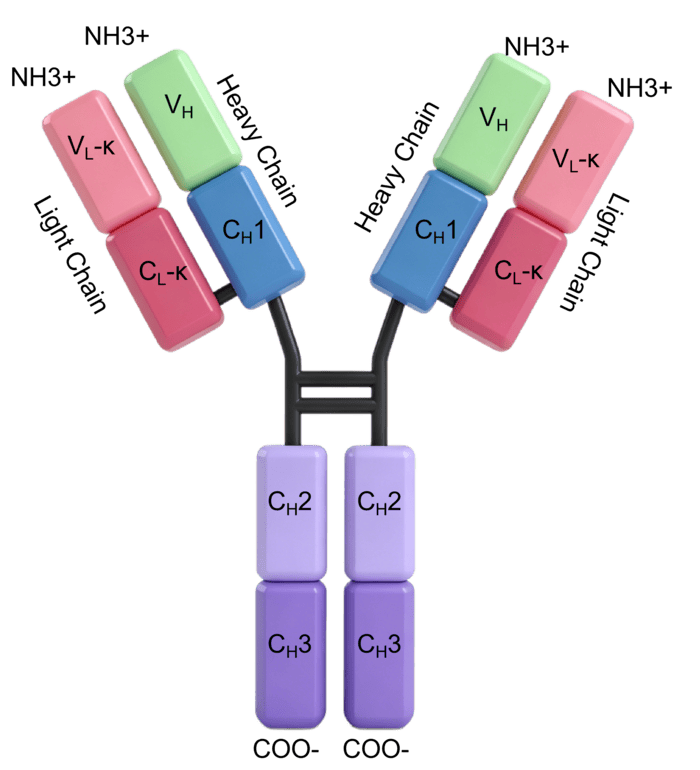
| Ig Type | IgG1, Kappa |
| Clone | 2L226 |
| Reactivity | Human |
| Verified Activity | 1. The Hela (H) cells were fixed with 4% PFA (10 min at r. T.) and then permeabilized with 90% ice-cold methanol for 20 min at -20℃, the cells then were incubated in 5% BSA to block non-specific protein-protein interactions (30 min at r. T.). Primary Antibody (green): Mouse Anti-G3BP1 antibody (TMAB-06236, 1:100); Isotype Control (orange): Rabbit IgG. Blank control (black): PBS. Acquisition of 20,000 events was performed. 2. 25 μg total protein per lane of various lysates (see on figure) probed with G3BP1 monoclonal antibody, unconjugated (TMAB-06236) at 1:500 dilution and 4°C overnight incubation. Followed by conjugated secondary antibody incubation at r. T. for 60 min. |
| Application | |
| Recommended Dose | WB: 1:500-2000; ICC/IF: 1:50-200; FCM: 1:50-100 |
| Antibody Type | Monoclonal |
| Host Species | Mouse |
| Subcellular Localization | Cytoplasm. Cytoplasm, cytosol. Cell membrane. Nucleus. Note=Cytoplasmic in proliferating cells, can be recruited to the plasma membrane in exponentially growing cells. Cytosolic and partially nuclear in resting cells. Recruited to stress granules (SGs) upon either arsenite or high temperature treatment. Recruitment to SGs is influenced by HRAS. |
| Tissue Specificity | Ubiquitous. |
| Construction | Recombinant Antibody |
| Purification | Protein G purified |
| Appearance | Liquid |
| Formulation | 0.01M TBS (pH7.4) with 1% BSA, 0.02% Proclin300 and 50% Glycerol. |
| Concentration | 1mg/ml |
| Research Background | This gene encodes one of the DNA-unwinding enzymes which prefers partially unwound 3'-tailed substrates and can also unwind partial RNA/DNA and RNA/RNA duplexes in an ATP-dependent fashion. This enzyme is a member of the heterogeneous nuclear RNA-binding proteins and is also an element of the Ras signal transduction pathway. It binds specifically to the Ras-GTPase-activating protein by associating with its SH3 domain. Several alternatively spliced transcript variants of this gene have been described, but the full-length nature of some of these variants has not been determined. [provided by RefSeq]. |
| Gene Name | G3BP1 |
| Gene ID | |
| Protein Name | Ras GTPase-activating protein-binding protein 1 |
| Function | May be a regulated effector of stress granule assembly. Phosphorylation-dependent sequence-specific endoribonuclease in vitro. Cleaves exclusively between cytosine and adenine and cleaves MYC mRNA preferentially at the 3'-UTR. ATP- and magnesium-dependent helicase. Unwinds preferentially partial DNA and RNA duplexes having a 17 bp annealed portion and either a hanging 3' tail or hanging tails at both 5'- and 3'-ends. Unwinds DNA/DNA, RNA/DNA, and RNA/RNA substrates with comparable efficiency. Acts unidirectionally by moving in the 5' to 3' direction along the bound single-stranded DNA. |
| Molecular Weight | Actual: 68 kDa. |
| Stability & Storage | Store at 2°C-8°C for 1 month. Store at -20°C or -80°C for 12 months. Avoid repeated freeze-thaw cycles. |
| Transport | Shipping with blue ice. |
| Size | Quantity | Unit Price | Amount | Operation |
|---|
 Feedback
 Hello! How can I help you today?
Copyright © 2015-2026 TargetMol Chemicals Inc. All Rights Reserved.
