


Shopping Cart
Remove All Your shopping cart is currently empty

Synonyms:
| Pack Size | Price | USA Stock | Global Stock | Quantity |
|---|---|---|---|---|
| 50 µL | $220 | 7-10 days | 7-10 days | |
| 100 µL | $373 | 7-10 days | 7-10 days |
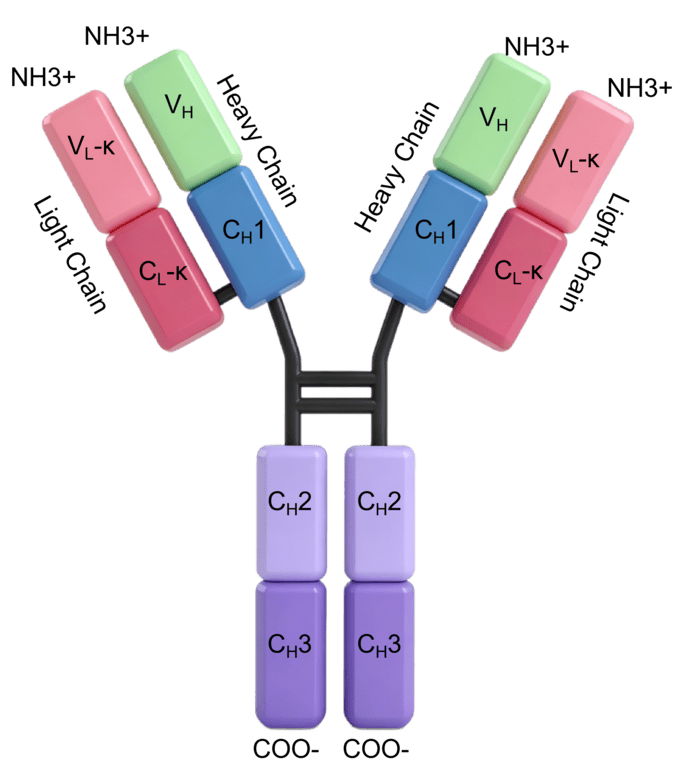
| Description | Anti-EZH2 Antibody (8M34) is a Mouse antibody targeting . Anti-EZH2 Antibody (8M34) can be used in WB,ICC/IF. |
| Ig Type | IgG1,IgK |
| Clone | 8M34 |
| Reactivity | Human |
| Verified Activity | 1. Blank control (black line): Jurkat. Primary Antibody (green line): Mouse Anti-EZH2 antibody (TMAB-05765) Dilution: 1 μg/Test; Secondary Antibody (white blue line): Goat anti-mouse IgG-FITC Dilution: 0.5 μg/Test. Isotype control (orange line): Normal Rabbit IgG Protocol The cells were fixed with 4% PFA (10 min at room temperature) and then permeabilized with 90% ice-cold methanol for 20 min at -20℃, The cells were then incubated in 5% BSA to block non-specific protein-protein interactions for 30 min at room temperature. Cells stained with Primary Antibody for 30 min at room temperature. The secondary antibody used for 40 min at room temperature. Acquisition of 20,000 events was performed. 2. 4% Paraformaldehyde-fixed Hela (H) cell; Triton X-100 at r. T. for 20 min; Antibody incubation with (EZH2) monoclonal Antibody, unconjugated (TMAB-05765) 1:50, 90 min at 37°C; followed by conjugated Goat Anti-Mouse IgG antibody (green) at 37°C for 90 min, DAPI (blue) was used to stain the cell nuclei. PBS instead of the primary antibody was used as the blank control. 3. 25 μg total protein per lane of various lysates (see on figure) probed with EZH2 monoclonal antibody, unconjugated (TMAB-05765) at 1:1000 dilution and 4°C overnight incubation. Followed by conjugated secondary antibody incubation at r. T. for 60 min. |
| Application | |
| Recommended Dose | WB=1:500-2000,ICC/IF=1:50-200 |
| Antibody Type | Monoclonal |
| Host Species | Mouse |
| Subcellular Localization | Nucleus. |
| Tissue Specificity | xpressed in many tissues. Overexpressed in numerous tumor types including carcinomas of the breast, colon, larynx, lymphoma and testis. |
| Construction | Hybridoma Monoclonal Antibody |
| Purification | Protein G purified |
| Appearance | Liquid |
| Formulation | 0.01M TBS (pH7.4) with 1% BSA, 0.02% Proclin300 and 50% Glycerol. |
| Concentration | 1mg/ml |
| Research Background | This gene encodes a member of the Polycomb-group (PcG) family. PcG family members form multimeric protein complexes, which are involved in maintaining the transcriptional repressive state of genes over successive cell generations. This protein associates with the embryonic ectoderm development protein, the VAV1 oncoprotein, and the X-linked nuclear protein. This protein may play a role in the hematopoietic and central nervous systems. Multiple alternatively splcied transcript variants encoding distinct isoforms have been identified for this gene. [provided by RefSeq, Feb 2011]. |
| Immunogen | Recombinant Protein: human EZH2 |
| Antigen Species | Human |
| Gene Name | EZH2 |
| Gene ID | |
| Protein Name | Histone-lysine N-methyltransferase EZH2 |
| Uniprot ID | |
| Function | olycomb group (PcG) protein. Catalytic subunit of the PRC2/EED-EZH2 complex, which methylates 'Lys-9' (H3K9me) and 'Lys-27' (H3K27me) of histone H3, leading to transcriptional repression of the affected target gene. Able to mono-, di- and trimethylate 'Lys-27' of histone H3 to form H3K27me1, H3K27me2 and H3K27me3, respectively. Compared to EZH2-containing complexes, it is more abundant in embryonic stem cells and plays a major role in forming H3K27me3, which is required for embryonic stem cell identity and proper differentiation. The PRC2/EED-EZH2 complex may also serve as a recruiting platform for DNA methyltransferases, thereby linking two epigenetic repression systems. Genes repressed by the PRC2/EED-EZH2 complex include HOXC8, HOXA9, MYT1, CDKN2A and retinoic acid target genes. EZH2 can also methylate non-histone proteins such as the transcription factor GATA4. |
| Molecular Weight | Theoretical: 82 kDa. Actual: 98 kDa. |
| Stability & Storage | Store at 2°C-8°C for 1 month. Store at -20°C or -80°C for 12 months. Avoid repeated freeze-thaw cycles. |
| Transport | Shipping with blue ice. |
| Size | Quantity | Unit Price | Amount | Operation |
|---|
 Feedback
 Hello! How can I help you today?
Copyright © 2015-2026 TargetMol Chemicals Inc. All Rights Reserved.
