


Shopping Cart
Remove All Your shopping cart is currently empty

Synonyms:
| Pack Size | Price | USA Stock | Global Stock | Quantity |
|---|---|---|---|---|
| 50 µL | $223 | 7-10 days | 7-10 days | |
| 100 µL | $372 | 7-10 days | 7-10 days |
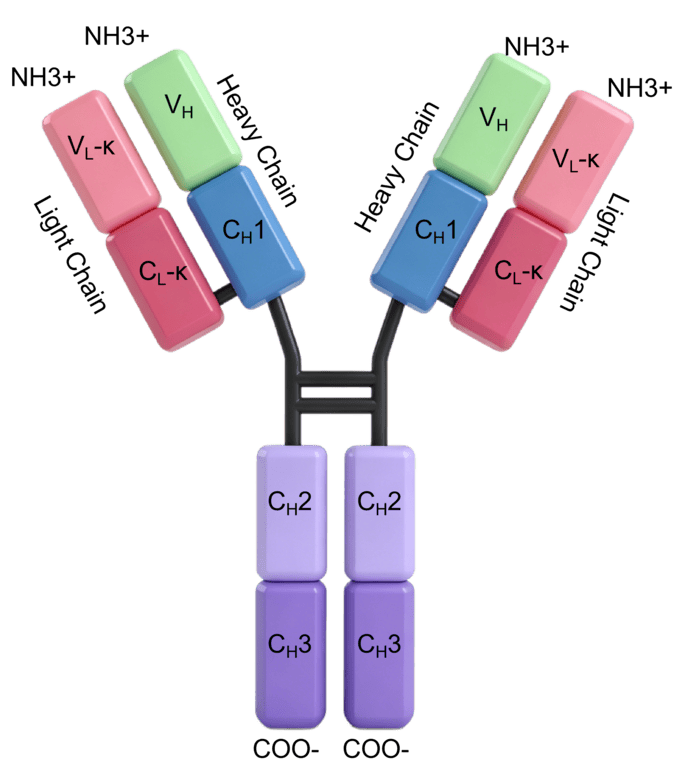
| Description | Anti-Erk2 Antibody (3J449) is a Mouse antibody targeting Erk2. Anti-Erk2 Antibody (3J449) can be used in WB,FCM. |
| Ig Type | IgG1, k |
| Clone | 3J449 |
| Reactivity | Human,Mouse,Rat (predicted:Xenopus,Bovine) |
| Verified Activity | 1. 25 μg total protein per lane of various lysates (see on figure) probed with ERK2 monoclonal antibody, unconjugated (TMAB-05671) at 1:1000 dilution and 4°C overnight incubation. Followed by conjugated secondary antibody incubation at r. T. for 60 min. 2. The Hela (H) cells were fixed with 4% PFA (10 min at r. T.) and then permeabilized with 90% ice-cold methanol for 20 min at -20℃, the cells then were incubated in 5% BSA to block non-specific protein-protein interactions (30 min at r. T.). Primary Antibody (green): Mouse Anti-ERK2 antibody (TMAB-05671): 1 μg/10^6 cells; Secondary Antibody (white blue): Goat anti-Mouse IgG-BF488: 1 μg/test. Blank control (black): PBS. Acquisition of 20,000 events was performed. |
| Application | |
| Recommended Dose | WB: 1:500-2000; FCM: 1μg/Test |
| Antibody Type | Monoclonal |
| Host Species | Mouse |
| Subcellular Localization | Cytoplasm, cytoskeleton, spindle. Nucleus. Cytoplasm, cytoskeleton, centrosome. Cytoplasm. Note=Associated with the spindle duringprometaphase and metaphase. PEA15-binding andphosphorylated DAPK1 promote its cytoplasmic retention.Phosphorylation at Ser-244 and Ser-246 as well asautophosphorylation at Thr-188 promote nuclear localization. |
| Tissue Specificity | Widely expressed. |
| Construction | Hybridoma Monoclonal Antibody |
| Purification | Protein G purified |
| Appearance | Liquid |
| Formulation | 0.01M TBS (pH7.4) with 1% BSA, 0.02% Proclin300 and 50% Glycerol. |
| Concentration | 1mg/ml |
| Research Background | The protein encoded by this gene is a member of the MAPkinase family. MAP kinases, also known as extracellularsignal-regulated kinases (ERKs), act in a signaling cascade thatregulates various cellular processes such as proliferation,differentiation, and cell cycle progression in response to avariety of extracellular signals. This kinase is activated byupstream kinases, resulting in its translocation to the nucleuswhere it phosphorylates nuclear targets. Alternatively splicedtranscript variants encoding different protein isoforms have beendescribed. [provided by RefSeq, Jul 2008]. |
| Immunogen | KLH conjugated synthetic peptide: human Erk2 |
| Antigen Species | Human |
| Gene Name | MAPK1 |
| Gene ID | |
| Protein Name | Mitogen-activated protein kinase 1 |
| Uniprot ID | |
| Function | This gene encodes a member of the MAP kinase family. MAP kinases, also known as extracellular signal-regulated kinases (ERKs), act as an integration point for multiple biochemical signals, and are involved in a wide variety of cellular processes such as proliferation, differentiation, transcription regulation and development. The activation of this kinase requires its phosphorylation by upstream kinases. Upon activation, this kinase translocates to the nucleus of the stimulated cells, where it phosphorylates nuclear targets. One study also suggests that this protein acts as a transcriptional repressor independent of its kinase activity. The encoded protein has been identified as a moonlighting protein based on its ability to perform mechanistically distinct functions. Two alternatively spliced transcript variants encoding the same protein, but differing in the UTRs, have been reported for this gene. [provided by RefSeq, Jan 2014] |
| Molecular Weight | Theoretical: 42 kDa. Actual: 42 kDa. |
| Stability & Storage | Store at 2°C-8°C for 1 month. Store at -20°C or -80°C for 12 months. Avoid repeated freeze-thaw cycles. |
| Transport | Shipping with blue ice. |
| Size | Quantity | Unit Price | Amount | Operation |
|---|
 Feedback
 Hello! How can I help you today?
Copyright © 2015-2026 TargetMol Chemicals Inc. All Rights Reserved.
