


Shopping Cart
Remove All Your shopping cart is currently empty

Synonyms: epidermal growth factor
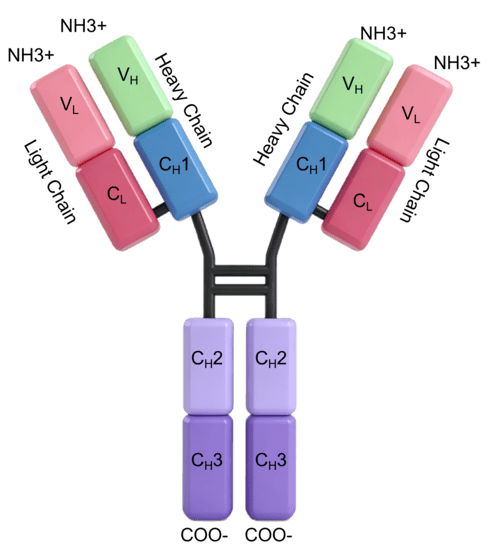
| Pack Size | Price | USA Stock | Global Stock | Quantity |
|---|---|---|---|---|
| 100 µL | $198 | 7-10 days | 7-10 days |
| Description | Anti-EGF Antibody (9E161) is a Mouse antibody targeting EGF. Anti-EGF Antibody (9E161) can be used in ELISA. |
| Synonyms | epidermal growth factor |
| Ig Type | Mouse IgG1 |
| Clone | 9E161 |
| Reactivity | Rat |
| Specificity | Rat EGF |
| Application | |
| Recommended Dose | ELISA: 1:1000-1:2000 |
| Antibody Type | Monoclonal |
| Host Species | Mouse |
| Construction | This antibody was produced from a hybridoma resulting from the fusion of a mouse myeloma with B cells obtained from a mouse immunized with purified, recombinant Rat Epidermal Growth Factor / EGF (rR Epidermal Growth Factor / EGF; TMPY-04220; NP_036974.1; Asn974-Arg1026). The IgG fraction of the cell culture supernatant was purified by Protein A affinity chromatography. |
| Purification | Protein A |
| Appearance | Liquid |
| Formulation | 0.2 μm filtered solution in PBS |
| Research Background | EGF is the founding member of the EGF-family of proteins. Members of this protein family have highly similar structural and functional characteristics. EGF contains 9 EGF-like domains and 9 LDL-receptor class B repeats. Human EGF is a 6045-Da protein with 53 amino acid residues and three intramolecular disulfide bonds. As a low-molecular-weight polypeptide, EGF was first purified from the mouse submandibular gland, but since then it was found in many human tissues including submandibular gland, parotid gland. It can also be found in human platelets, macrophages, urine, saliva, milk, and plasma. EGF is a growth factor that stimulates the growth of various epidermal and epithelial tissues in vivo and in vitro and of some fibroblasts in cell culture. It results in cellular proliferation, differentiation, and survival. Salivary EGF, which seems also regulated by dietary inorganic iodine, also plays an important physiological role in the maintenance of oro-esophageal and gastric tissue integrity. EGF acts by binding with high affinity to epidermal growth factor receptor on the cell surface and stimulating the intrinsic protein-tyrosine kinase activity of the receptor. The tyrosine kinase activity, in turn, initiates a signal transduction cascade that results in a variety of biochemical changes within the cell - a rise in intracellular calcium levels, increased glycolysis and protein synthesis, and increases in the expression of certain genes including the gene for EGFR - that ultimately lead to DNA synthesis and cell proliferation. |
| Conjucates | Unconjugated |
| Immunogen | Recombinant Protein: Rat Epidermal Growth Factor / EGF Protein (TMPY-04220) |
| Antigen Species | Rat |
| Stability & Storage | Store at 2°C-8°C for 1 month. Store at -20°C or -80°C for 12 months. Avoid repeated freeze-thaw cycles. Preservative-Free. |
| Transport | Shipping with blue ice. |
| Size | Quantity | Unit Price | Amount | Operation |
|---|
 Feedback
 Hello! How can I help you today?
Copyright © 2015-2026 TargetMol Chemicals Inc. All Rights Reserved.
