


Shopping Cart
Remove All Your shopping cart is currently empty

Synonyms:
| Pack Size | Price | USA Stock | Global Stock | Quantity |
|---|---|---|---|---|
| 25 µL | $150 | 7-10 days | 7-10 days | |
| 50 µL | $262 | 7-10 days | 7-10 days | |
| 100 µL | $473 | 7-10 days | 7-10 days |
| Description | Anti-CXCR7 Antibody (6Q33) is a Mouse antibody targeting CXCR7. Anti-CXCR7 Antibody (6Q33) can be used in WB,ICC/IF. |
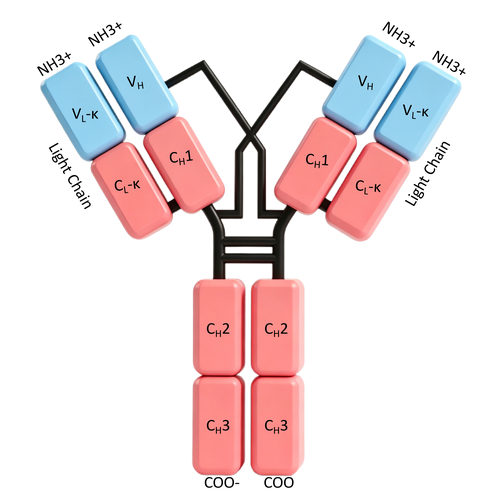
| Ig Type | IgG2b/Kappa |
| Clone | 6Q33 |
| Reactivity | Human |
| Verified Activity | 1. Cell line: Raji Fixative: 4% Paraformaldehyde Permeabilization: 0.1% TritonX-100 Primary Ab dilution: 1:50 Primary incubation condition: 4°C overnight Secondary Ab: Goat Anti-Mouse IgG Nuclear counter stain: DAPI (Blue) Comment: Color green is the positive signal for TMAB-04809 2. Blocking buffer: 5% NFDM/TBST Primary Ab dilution: 1:1000 Primary Ab incubation condition: 4°C overnight Secondary Ab: Goat Anti-Mouse IgG H&L (HRP) Lysate: 1: Raji Protein loading quantity: 20 μg Exposure time: 30 s Predicted MW: 60 kDa Observed MW: 60 kDa |
| Application | |
| Recommended Dose | WB: 1:500-2000; ICC/IF: 1:50-200 |
| Antibody Type | Monoclonal |
| Host Species | Mouse |
| Subcellular Localization | Cell membrane; Multi-pass membrane protein. Cytoplasm, perinuclear region. Early endosome. Recycling endosome (By similarity). Note=Localized mainly in perinuclear regions in neurons and in early endosomes in T-lymphocytes and some other cell types, with very low levels detected on the cell surface. May spontaneously cycle between the plasma membrane and endosomal compartments. |
| Tissue Specificity | Expressed in monocytes, basophils, B-cells, umbilical vein endothelial cells (HUVEC) and B-lymphoblastoid cells. Lower expression detected in CD4+ T-lymphocytes and natural killer cells. In the brain, detected in endothelial cells and capillaries, and in mature neurons of the frontal cortex and hippocampus. Expressed in tubular formation in the kidney. Highly expressed in astroglial tumor endothelial, microglial and glioma cells. Expressed at low levels in normal CD34+ progenitor cells, but at very high levels in several myeloid malignant cell lines. Expressed in breast carcinomas but not in normal breast tissue (at protein level). |
| Construction | Recombinant Antibody |
| Purification | Protein G purified |
| Appearance | Liquid |
| Formulation | 0.01M TBS (pH7.4) with 1% BSA, 0.02% Proclin300 and 50% Glycerol. |
| Concentration | 1mg/ml |
| Research Background | This gene encodes a member of the G-protein coupled receptor family. Although this protein was earlier thought to be a receptor for vasoactive intestinal peptide (VIP), it is now considered to be an orphan receptor, in that its endogenous ligand has not been identified. The protein is also a coreceptor for human immunodeficiency viruses (HIV). Translocations involving this gene and HMGA2 on chromosome 12 have been observed in lipomas. [provided by RefSeq, Jul 2008] |
| Gene Name | ACKR3 |
| Gene ID | |
| Protein Name | Atypical chemokine receptor 3 |
| Function | Receptor for chemokines CXCL12/SDF1 and CXCL11. Does not elicit classical chemokine receptor signaling; chemokine binding does not activate G-protein-mediated signal transduction but instead induces beta-arrestin recruitment, leading to ligand internalization and activation of MAPK signaling pathway. Acts as a scavenger for CXCL12/SDF1 and, to a lesser extent, for CXCL11. Required for regulation of CXCR4 protein levels in migrating interneurons, thereby adapting their chemokine responsiveness. In glioma cells, transduces signals via MEK/ERK pathway, mediating resistance to apoptosis. Promotes cell growth and survival. Not involved in cell migration, adhesion or proliferation of normal hematopoietic progenitors but activated by CXCL11 in malignant hemapoietic cells, leading to phosphorylation of ERK1/2 (MAPK3/MAPK1) and enhanced cell adhesion and migration. Plays a regulatory role in CXCR4-mediated activation of cell surface integrins by CXCL12. Required for heart valve development. Acts as coreceptor with CXCR4 for a restricted number of HIV isolates. |
| Stability & Storage | Store at 2°C-8°C for 1 month. Store at -20°C or -80°C for 12 months. Avoid repeated freeze-thaw cycles. |
| Transport | Shipping with blue ice. |
| Size | Quantity | Unit Price | Amount | Operation |
|---|
 Feedback
 Hello! How can I help you today?
Copyright © 2015-2026 TargetMol Chemicals Inc. All Rights Reserved.
