


Shopping Cart
Remove All Your shopping cart is currently empty

Synonyms:
| Pack Size | Price | USA Stock | Global Stock | Quantity |
|---|---|---|---|---|
| 25 µL | $149 | 7-10 days | 7-10 days | |
| 50 µL | $262 | 7-10 days | 7-10 days | |
| 100 µL | $471 | 7-10 days | 7-10 days |
| Description | Anti-CD321 Antibody (6L868) is a Mouse antibody targeting CD321. Anti-CD321 Antibody (6L868) can be used in ICC/IF,FCM. |
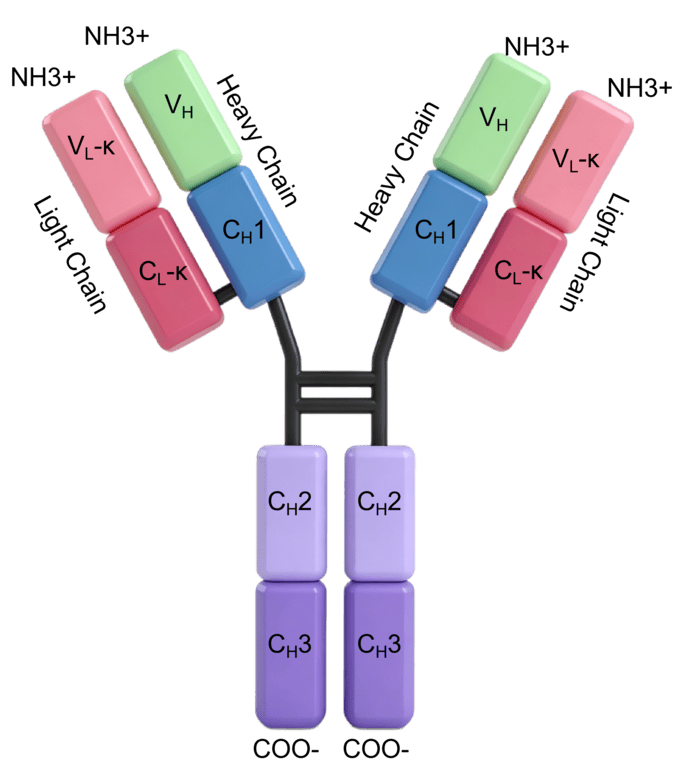
| Ig Type | IgG1, Kappa |
| Clone | 6L868 |
| Reactivity | Human |
| Verified Activity | 1. Cell line: HT-29 Fixative: 4% Paraformaldehyde Permeabilization: 0.1% Triton X-100 Primary Ab dilution: 1:50 Primary incubation condition: 4°C overnight Secondary Ab: Goat Anti-Mouse IgG Nuclear counter stain: DAPI (Blue) Comment: Color green is the positive signal for TMAB-03954 2. Cell line: HT-29 Fixative: Unfixed Permeabilization: None Primary Ab dilution: 1:100 Secondary Ab: Goat anti Mouse IgG Unlabelled control: The cell without incubation with primary antibody and secondary antibody (Black line). Isotype control: Mouse monoclonal IgG1 (Blue line). Comment: Line red is the positive signal for TMAB-03954 |
| Application | |
| Recommended Dose | ICC/IF: 1:100-500; FCM: 1:50-100 |
| Antibody Type | Monoclonal |
| Host Species | Mouse |
| Subcellular Localization | Cell junction, tight junction. Cell membrane; Single-pass type I membrane protein. |
| Construction | Recombinant Antibody |
| Purification | Protein G purified |
| Appearance | Liquid |
| Formulation | 0.01M TBS (pH7.4) with 1% BSA, 0.02% Proclin300 and 50% Glycerol. |
| Concentration | 1mg/ml |
| Research Background | Junctional Adhesion Molecule 1 (JAM1) seems to play a role in epithelial tight junction formation. It appears early in primordial forms of cell junctions and recruits PARD3. The association of the PARD6-PARD3 complex may prevent the interaction of PARD3 with JAM1, thereby preventing tight junction assembly. JAM1 plays a role in regulating monocyte transmigration involved in integrity of the epithelial barrier. JAM1 is also involved in platelet activation. |
| Gene Name | F11R |
| Gene ID | |
| Protein Name | Junctional adhesion molecule A |
| Function | Seems to plays a role in epithelial tight junction formation. Appears early in primordial forms of cell junctions and recruits PARD3. The association of the PARD6-PARD3 complex may prevent the interaction of PARD3 with JAM1, thereby preventing tight junction assembly (By similarity). Plays a role in regulating monocyte transmigration involved in integrity of epithelial barrier. Involved in platelet activation. In case of orthoreovirus infection, serves as receptor for the virus. |
| Stability & Storage | Store at 2°C-8°C for 1 month. Store at -20°C or -80°C for 12 months. Avoid repeated freeze-thaw cycles. |
| Transport | Shipping with blue ice. |
| Size | Quantity | Unit Price | Amount | Operation |
|---|
 Feedback
 Hello! How can I help you today?
Copyright © 2015-2026 TargetMol Chemicals Inc. All Rights Reserved.
