


Shopping Cart
Remove All Your shopping cart is currently empty

Synonyms:
| Pack Size | Price | USA Stock | Global Stock | Quantity |
|---|---|---|---|---|
| 25 µL | $148 | 7-10 days | 7-10 days | |
| 50 µL | $263 | 7-10 days | 7-10 days | |
| 100 µL | $471 | 7-10 days | 7-10 days |
| Description | Anti-CD1d Antibody (9R720) is a Mouse antibody targeting CD1d. Anti-CD1d Antibody (9R720) can be used in ICC/IF,FCM. |
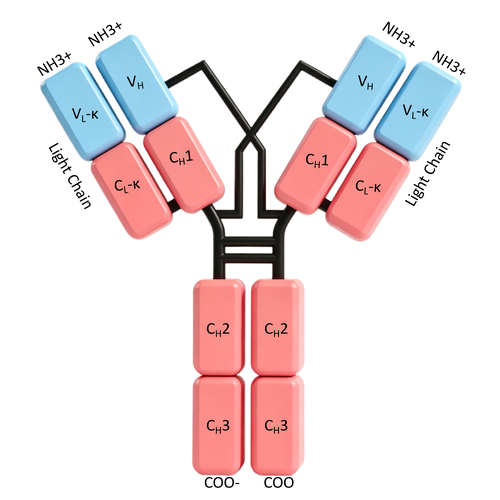
| Ig Type | IgG2b/Kappa |
| Clone | 9R720 |
| Reactivity | Human |
| Verified Activity | 1. Cell line: Jurkat Fixative: 4% Paraformaldehyde Permeabilization: 0.1% Triton X-100 Primary Ab dilution: 1:50 Primary incubation condition: 4°C overnight Secondary Ab: Goat Anti-Mouse IgG Nuclear counter stain: DAPI (Blue) Comment: Color green is the positive signal for TMAB-03899 2. Cell line: Jurkat Fixative: Unfixed Permeabilization: None Primary Ab dilution: 1:50 Secondary Ab: Goat anti Mouse IgG Unlabelled control: The cell without incubation with primary antibody and secondary antibody (Black line). Isotype control: Mouse monoclonal IgG2b (Blue line). Comment: Line red is the positive signal for TMAB-03899 |
| Application | |
| Recommended Dose | ICC/IF: 1:100-500; FCM: 1:50-200 |
| Antibody Type | Monoclonal |
| Host Species | Mouse |
| Subcellular Localization | Cell membrane, Single-pass type I membrane protein. Basolateral cell membrane; Single-pass type I membrane protein. Endosome membrane; Single-pass type I membrane protein. Lysosome membrane; Single-pass type I membrane protein. Endoplasmic reticulum membrane; Single-pass type I membrane protein. Note=Subject to intracellular trafficking between the cell membrane, endosomes and lysosomes. |
| Tissue Specificity | Expressed on cortical thymocytes, on certain T-cell leukemias, and in various other tissues. |
| Construction | Recombinant Antibody |
| Purification | Protein G purified |
| Appearance | Liquid |
| Formulation | 0.01M TBS (pH7.4) with 1% BSA, 0.02% Proclin300 and 50% Glycerol. |
| Concentration | 1mg/ml |
| Research Background | This gene encodes a divergent member of the CD1 family of transmembrane glycoproteins, which are structurally related to the major histocompatibility complex (MHC) proteins and form heterodimers with beta-2-microglobulin. The CD1 proteins mediate the presentation of primarily lipid and glycolipid antigens of self or microbial origin to T cells. The human genome contains five CD1 family genes organized in a cluster on chromosome 1. The CD1 family members are thought to differ in their cellular localization and specificity for particular lipid ligands. The protein encoded by this gene localizes to late endosomes and lysosomes via a tyrosine-based motif in the cytoplasmic tail. Two transcript variants encoding different isoforms have been found for this gene. [provided by RefSeq, Jan 2016] |
| Gene Name | CD1D |
| Gene ID | |
| Protein Name | Antigen-presenting glycoprotein CD1d |
| Uniprot ID | |
| Function | Antigen-presenting protein that binds self and non-self glycolipids and presents them to T-cell receptors on natural killer T-cells. |
| Stability & Storage | Store at 2°C-8°C for 1 month. Store at -20°C or -80°C for 12 months. Avoid repeated freeze-thaw cycles. |
| Transport | Shipping with blue ice. |
| Size | Quantity | Unit Price | Amount | Operation |
|---|
 Feedback
 Hello! How can I help you today?
Copyright © 2015-2026 TargetMol Chemicals Inc. All Rights Reserved.
