


Shopping Cart
Remove All Your shopping cart is currently empty

Synonyms:
| Pack Size | Price | USA Stock | Global Stock | Quantity |
|---|---|---|---|---|
| 25 µL | $149 | 7-10 days | 7-10 days | |
| 50 µL | $264 | 7-10 days | 7-10 days | |
| 100 µL | $473 | 7-10 days | 7-10 days |
| Description | Anti-ATP5A1 Antibody (9C595) is a Mouse antibody targeting ATP5A1. Anti-ATP5A1 Antibody (9C595) can be used in WB,IHC-P,IHC-Fr,ICC/IF,IF. |
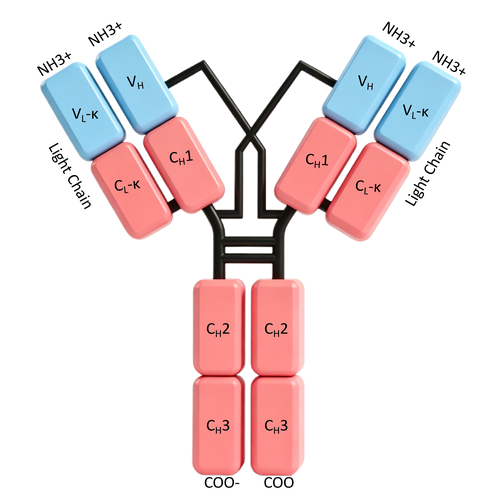
| Ig Type | IgG2b/Kappa |
| Clone | 9C595 |
| Reactivity | Human,Mouse,Rat |
| Verified Activity | 1. Blocking buffer: 5% NFDM/TBST Primary ab dilution: 1:1000 Primary ab incubation condition: 2 hours at room temperature Secondary ab: Goat Anti-Rabbit IgG H&L (HRP) Lysate: HepG2, 4T1, SH-SY5Y, BRL Protein loading quantity: 20 μg Exposure time: 3 s Predicted MW: 50 kDa Observed MW: 50 kDa 2. Tissue: Rat kidney Section type: Formalin fixed & Paraffin-embedded section Retrieval method: High temperature and high pressure Retrieval buffer: Tris/EDTA buffer, pH 9.0 Primary ab dilution: 1:100 Primary ab incubation condition: 1 hour at room temperature Secondary ab: SP Kit (Mouse) Counter stain: Hematoxylin (Blue) Comment: Color brown is the positive signal for TMAB-02950 3. Tissue: Human skeletal muscle Section type: Formalin fixed & Paraffin-embedded section Retrieval method: High temperature and high pressure Retrieval buffer: Tris/EDTA buffer, pH 9.0 Primary ab dilution: 1:100 Primary ab incubation condition: 1 hour at room temperature Secondary ab: SP Kit (Mouse) Counter stain: Hematoxylin (Blue) Comment: Color brown is the positive signal for TMAB-02950 4. Tissue: Mouse heart Section type: Formalin fixed & Paraffin-embedded section Retrieval method: High temperature and high pressure Retrieval buffer: Tris/EDTA buffer, pH 9.0 Primary ab dilution: 1:100 Primary ab incubation condition: 1 hour at room temperature Secondary ab: SP Kit (Mouse) Counter stain: Hematoxylin (Blue) Comment: Color brown is the positive signal for TMAB-02950 |
| Application | |
| Recommended Dose | WB: 1:500-2000; IHC-P: 1:100-500; IHC-Fr: 1:100-500; ICC/IF: 1:50-200; IF: 1:100-500 |
| Antibody Type | Monoclonal |
| Host Species | Mouse |
| Subcellular Localization | Mitochondrion. Mitochondrion inner membrane. |
| Construction | Recombinant Antibody |
| Purification | Protein G purified |
| Appearance | Liquid |
| Formulation | 0.01M TBS (pH7.4) with 1% BSA, 0.02% Proclin300 and 50% Glycerol. |
| Concentration | 1mg/ml |
| Research Background | ATP5J (ATP synthase, H+ transporting, mitochondrial F0 complex, subunit F6) is a multisubunit membrane-bound enzyme complex consisting of an F0 segment embedded in the membrane and an F1 segment attached to the F0. It is also a component of mitochondrial ATP synthase which is required for the interactions of the catalytic and proton-translocating segments. Human ATP5J shares 72% sequence identity with rat ATP5J. This signal peptide is rich in basic amino acids, devoid of acidic amino acids, and amphiphilic, which allows it to be water-soluble yet capable of passage through the phospholipid membrane bilayers. Moreover, it is circulating and functions as an endogenous vasoconstrictor by inhibiting cytosolic phospholipase A2. |
| Gene Name | ATP5F1A |
| Gene ID | |
| Protein Name | ATP synthase subunit alpha, mitochondrial |
| Function | Mitochondrial membrane ATP synthase (F(1)F(0) ATP synthase or Complex V) produces ATP from ADP in the presence of a proton gradient across the membrane which is generated by electron transport complexes of the respiratory chain. F-type ATPases consist of two structural domains, F(1) - containing the extramembraneous catalytic core and F(0) - containing the membrane proton channel, linked together by a central stalk and a peripheral stalk. During catalysis, ATP synthesis in the catalytic domain of F(1) is coupled via a rotary mechanism of the central stalk subunits to proton translocation. Part of the complex F(0) domain and the peripheric stalk, which acts as a stator to hold the catalytic alpha(3)beta(3) subcomplex and subunit a/ATP6 static relative to the rotary elements. Also involved in the restoration of oligomycin-sensitive ATPase activity to depleted F1-F0 complexes. |
| Stability & Storage | Store at 2°C-8°C for 1 month. Store at -20°C or -80°C for 12 months. Avoid repeated freeze-thaw cycles. |
| Transport | Shipping with blue ice. |
| Size | Quantity | Unit Price | Amount | Operation |
|---|
 Feedback
 Hello! How can I help you today?
Copyright © 2015-2026 TargetMol Chemicals Inc. All Rights Reserved.
